
Vitamin C is one of the most researched ingredients in skin care, and for good reason. It plays a direct role in collagen synthesis and helps manage the visible effects of oxidative stress. But ascorbic acid, the active form of vitamin C, can become unstable i when not formulated correctly. Understanding why a vitamin C serum stops performing (or never performed well to begin with) starts with understanding the molecule itself, not the marketing around it.
The instability problem is a chemistry problem
Ascorbic acid can oxidize easily. Exposure to air, light, heat, and even time on a shelf can break down the molecule before it ever reaches the skin. Once oxidation occurs, the ingredient loses its ability to support the skin functions it was formulated to target. This is why so many vitamin C serums change color, texture, or performance within weeks of opening. The active center of the molecule has already degraded.
This instability also explains why concentration alone is a misleading metric. A serum listed at a high percentage of vitamin C offers little value if the molecule has already broken down by the time it's applied. Stability, not just percentage, determines whether a formula can actually deliver on its intended function. Formulating for stability requires controlling how and when the active ingredient is released, not simply increasing how much is included.
Why irritation often signals a formulation issue, not a skin issue
Many consumers stop using vitamin C serums because of irritation, breakouts, or bumps – and often assume their skin "can't tolerate vitamin C." In many cases, the issue is the formulation, not the skin. High concentrations of unbuffered ascorbic acid, combined with a pH far from skin's natural range, can compromise the skin barrier rather than support it.
This is where a barrier-first approach matters. A well-formulated vitamin C serum should prioritize performance over raw percentage, maintaining effectiveness while keeping the formula's pH close to skin's own natural range. This proximity to skin's baseline chemistry is designed to help minimize the irritation that often leads people to abandon vitamin C altogether.
The odor signals more than just an unpleasant sensory experience
If you've used a vitamin C serum that developed a metallic or “hot dog” odor, that's not incidental – it's a visible sign of oxidation in progress. The same chemical breakdown that compromises performance is often what produces that smell. In other words, the odor is diagnostic information about the formula's stability, not just a sensory inconvenience to mask with added scent.
A properly stabilized formula avoids this problem at the source. Rather than relying on fragrance to cover an oxidized odor, a stable formula can maintain a natural, fresh citrus scent – a result of the ingredient's stability, not a substitute for it. When a formula is genuinely stable, there's nothing to mask.
How stability is bio-engineered at the molecular level
Preventing oxidation before it starts requires more than careful packaging or opaque bottles. The most effective approach involves temporarily blocking the active center of the ascorbic acid molecule so it can only be broken down by enzymes within the skin itself. This means the molecule can resist exposure to air, temperature, and time while it sits in the bottle and only activates upon reaching the skin, where it can work with skin biology as intended.
This kind of biologically engineered delivery system is what separates a formula built for long-term reliability from one that degrades before it can perform.
What to use instead
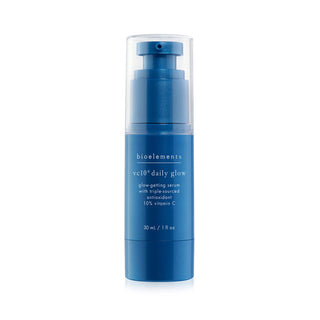
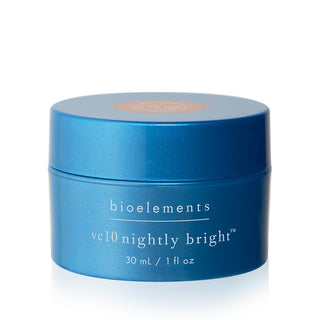
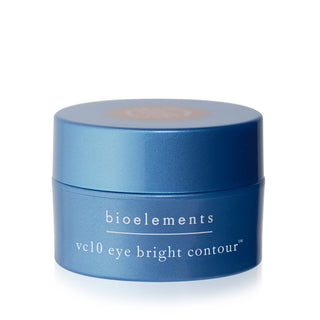
If your current vitamin C serum has changed color, developed an odor, or left your skin reactive, the issue is likely the formula – not a reason to give up on vitamin C altogether. Biolements vc10 collection was engineered specifically to address the three problems consumers run into most often:
- Irritation, breakouts, and bumps: Bioelements vc10 formulas prioritize performance over raw percentage, calibrated for effectiveness and stability at 10%, with a pH near 5 to 6 to stay close to skin's own natural range and help minimize irritation.
- Unpleasant odor: Because the formula resists oxidation, there's no metallic or “hot dog” scent to mask. vc10 relies on a natural, fresh citrus aroma – no masking, no fake fragrance.
- Instability: The active center of the ascorbic acid molecule in vc10 is temporarily blocked and only broken down by enzymes in the skin, allowing it to resist exposure to air, temperature, and time until it's ready to work with skin biology.
The takeaway
Vitamin C doesn't stop working because the ingredient is inherently unreliable – it stops working when the formulation can't protect it from oxidation long enough to matter. Stability, pH, and delivery system design are what determine whether a vitamin C serum can actually support skin over time.
about the skin journal by bioelements
The skin journal is Bioelements professional point of view on skin health, facials, and barrier-first care. Developed in collaboration with Bioelements estheticians and educators, each article translates skin biology, biomarkers, and treatment-room experience into clear, actionable guidance for real results. Grounded in decades of professional expertise, the skin journal reflects our belief that lasting skin transformation starts with decoding skin biology – not chasing trends.