
Retinol has long been positioned as the standard for smoother, firmer-looking skin, but the reality of how skin changes over time may call for a more nuanced approach – one that considers not just renewal, but the condition of the skin that is being asked to renew in the first place.
Why can retinol irritate skin?
Retinol speeds up cell turnover, but it can also push the skin into a state where barrier function starts to decline, especially when layered incorrectly, used too frequently or introduced to skin that is already compromised. When stronger renewal ingredients are introduced without considering barrier capacity, the skin is often pushed into a cycle that prioritizes speed over stability. Transepidermal water loss increases, hydration drops and low-level inflammation becomes easier to trigger, which shifts how the skin looks and behaves.
“One of the most common changes I see in my clients’ skin over time is a gradual shift in biomarkers, like collagen loss and reduced barrier integrity,” explains Beth Bialko, biolelements esthetician.
As the barrier weakens, retinol can exacerbate these biomarkers, affecting how the skin looks and feels. In that compromised state, even beneficial processes like cell turnover can be disruptive, because the foundation they rely on is no longer fully intact.
Esthetician-recommended retinol alternatives
Ingredients that improve skin firmness
Rather than accelerating turnover at the expense of the skin barrier, ingredients like retinopeptides and bakuchiol are designed to support the same visible pathways associated with smoother, more even-looking skin while remaining compatible with consistent use. They help encourage renewal, support elasticity and improve the appearance of fine lines, but in a way that allows the skin to stay balanced throughout the process.
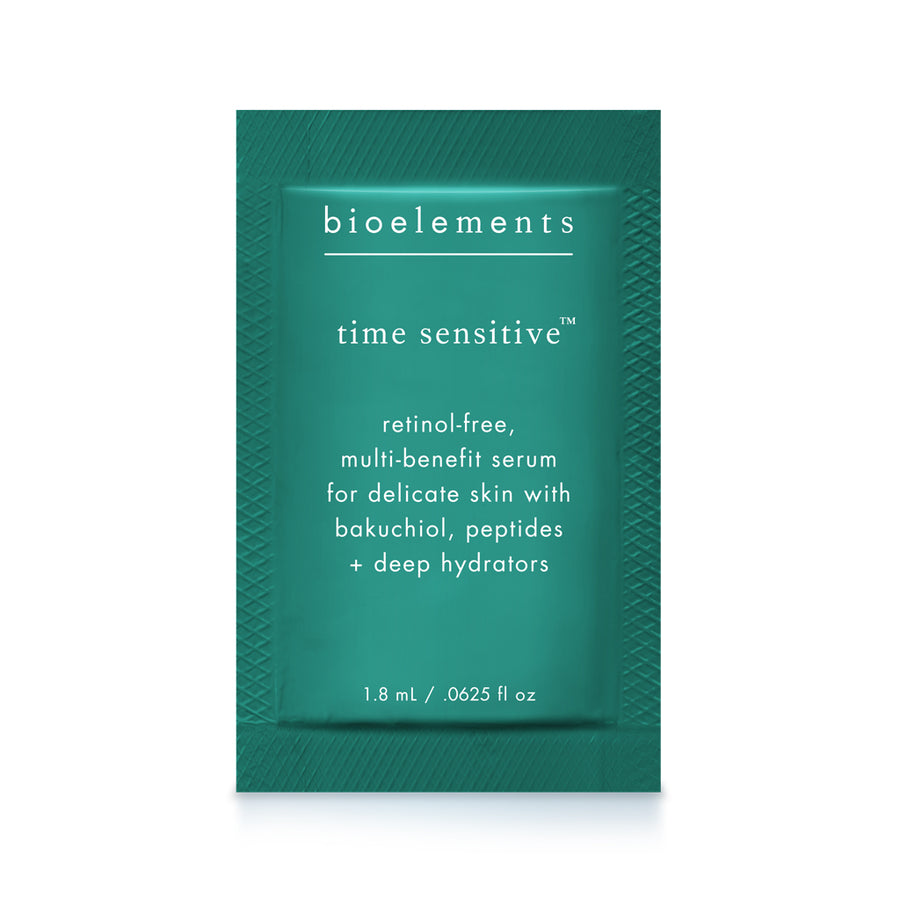
That distinction becomes even more meaningful when paired with advances in biotechnology, where ingredients are engineered to work with the skin at a more targeted level. In formulas like firmwear, biomimetic peptides can help support collagen, elastin and hyaluronic acid pathways, reinforcing the skin’s structural network while improving how it responds over time. In formulas like time sensitive, potent bakuchiol, a natural retinol alternative, plus legacy peptides, targets premature age progression with a powerful antioxidant defense.
The role of antioxidants and barrier support
Antioxidants, like vitamin C, and barrier-supporting ingredients play an essential role in firming skin, helping defend against oxidative stress that accelerates collagen breakdown while reinforcing the skin’s ability to retain moisture and recover from daily exposure. When the barrier is supported and inflammation is kept in check, the skin is better positioned to respond to treatment, and the visible signs of firmness, smoothness and clarity begin to improve in a way that feels steady rather than reactive.
Retinol remains a well-known option, but it is no longer the only one. Retinol alternatives offer a way to support firmness through balanced, consistent renewal, creating results that are not only visible but also sustainable.
FAQs: Retinol alternatives
Why can retinol irritate skin?
Retinol speeds up cell turnover, but it can also push the skin into a state where barrier function starts to decline, especially when layered incorrectly, used too frequently or introduced to skin that is already compromised.
How does retinol affect the skin barrier?
When stronger renewal ingredients are introduced without considering barrier capacity, the skin is often pushed into a cycle that prioritizes speed over stability. Transepidermal water loss increases, hydration drops and low-level inflammation becomes easier to trigger.
Why can retinol make skin look worse before it improves?
In a compromised state, retinol can exacerbate underlying biomarkers like reduced barrier integrity and collagen loss, affecting how the skin looks and feels while increasing sensitivity.
What are esthetician-recommended alternatives to retinol?
Ingredients like retinopeptides and bakuchiol are designed to support the same visible pathways associated with smoother, more even-looking skin while remaining compatible with consistent use.
Do retinol alternatives help with skin firmness?
Retinopeptides and bakuchiol help encourage renewal, support elasticity and improve the appearance of fine lines in a way that allows the skin to stay balanced throughout the process.
How do biomimetic peptides support firm skin?
Biomimetic peptides can help support collagen, elastin and hyaluronic acid pathways, reinforcing the skin’s structural network while improving how it responds over time.
What role do antioxidants play in firming skin?
Antioxidants, like vitamin C, help defend against oxidative stress that accelerates collagen breakdown while supporting the skin’s ability to recover from daily exposure.
Can you improve skin firmness without retinol?
Retinol alternatives offer a way to support firmness through balanced, consistent renewal, creating results that are not only visible but also sustainable.
about the skin journal by bioelements
The skin journal is Bioelements professional point of view on skin health, facials, and barrier-first care. Developed in collaboration with Bioelements estheticians and educators, each article translates skin biology, biomarkers, and treatment-room experience into clear, actionable guidance for real results. Grounded in decades of professional expertise, the skin journal reflects our belief that lasting skin transformation starts with decoding skin biology – not chasing trends.