
If you’re searching for the best sunscreen for dark spots, here’s what actually matters: SPF is essential, but it’s only part of the solution. To visibly improve discoloration, skin needs protection from UV and support beneath the surface to treat it at the same time.
What causes dark spots?
Before getting into the best solution for dark spots, it helps to understand why they show up in the first place.
Dark spots are a form of hyperpigmentation, meaning certain areas of your skin start producing more melanin, the pigment that gives your skin its color. This doesn’t happen randomly. It’s your skin reacting to different types of stress.
“Sun exposure is a primary culprit of hyperpigmentation,” explains Teresa Stenzel, Bioelements esthetician. “When your skin encounters harmful UVA and UVB rays, it goes into protective mode. This protective mode results in a surge in melanin, which can sometimes lead to uneven patches, ranging in color from brown to subtle gray, red or pink.”
The sun is a major trigger, but it’s not the only one. Hormonal changes (like those during pregnancy, from birth control or menopause) can also throw off melanin production, leading to patches of discoloration. And if you’ve ever noticed a dark mark left behind after a breakout or irritation, that’s post-inflammatory hyperpigmentation (PIH), which forms as the skin heals from inflammation or injury.
In short, dark spots are your skin’s response to something it’s trying to protect or repair, which is exactly why treating them takes more than just one step.
What sunscreen duo should I use for dark spots?
To treat and prevent future dark spots, estheticians recommend a simple pairing: a precision hyperpigmentation treatment followed by a broad-spectrum sunscreen.
One treats, while the other protects.
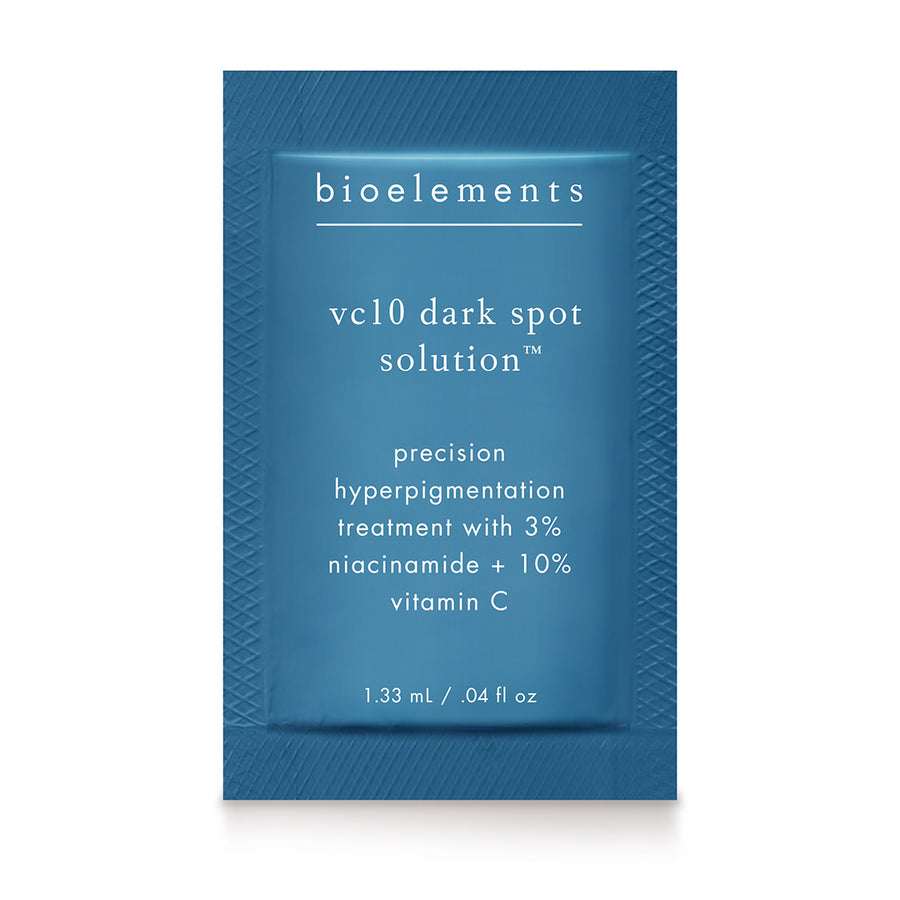
A hyperpigmentation treatment, like vc10 dark spot solution, helps improve dark spots and discoloration that have already formed. By targeting excess pigment where it forms, it works to gradually brighten and even out skin tone over time.
But treating alone isn’t enough. Without daily protection, those same dark spots can return or deepen. That’s where sunscreen becomes non-negotiable.
Follow with a broad-spectrum SPF 30 or higher to defend against UVA and UVB rays, the primary drivers of hyperpigmentation. The right formula should feel weightless on the skin, layer seamlessly over treatment products, and deliver lasting protection without leaving behind excess shine.
Used together, this duo does more than just fade what’s already visible. It helps interrupt the cycle of discoloration, so skin stays clearer, brighter and more even-looking over time.
Why SPF alone isn’t enough for dark spots
Sunscreen is essential for protecting the skin, but it doesn’t treat dark spots, discoloration, or uneven tone that have already formed from past skin trauma.
UV exposure is one of the biggest triggers of hyperpigmentation, which is why daily SPF is critical. It helps prevent new spots from forming and keeps existing discoloration from becoming darker or more persistent. But protection only goes so far. SPF works at the surface to block damage before it happens, but it doesn’t reach the underlying pigment that’s already been produced.
To visibly improve dark spots, you need targeted ingredients (like vitamin C and tranexamic acid) that help target pigmentation formation, improve irregular discoloration and correct the appearance of dark spots. Without that step, discoloration can linger, even with consistent sunscreen use.
That’s why treating and protecting go hand in hand. SPF helps stop the cycle from continuing, while a dedicated treatment works to correct what’s already there.
FAQs: Sunscreen pairing for dark spots
What is the best sunscreen for dark spots?
The best sunscreen for dark spots is a broad-spectrum SPF 30 or higher that protects against both UVA and UVB rays, paired with a targeted treatment to visibly improve discoloration.
Can sunscreen remove dark spots?
No, sunscreen cannot remove dark spots, but it helps prevent them from getting darker and stops new discoloration from forming.
Why do I still have dark spots even when I wear sunscreen?
Sunscreen protects against future damage, but it doesn’t treat existing pigmentation, which is why targeted ingredients are needed to visibly reduce dark spots.
What causes dark spots on the face?
Dark spots are caused by excess melanin production triggered by sun exposure, hormonal changes, or post-inflammatory responses like acne or irritation.
What is post-inflammatory hyperpigmentation (PIH)?
PIH is a type of dark spot that forms after the skin heals from inflammation, such as acne, irritation or injury.
What ingredients help fade dark spots?
Ingredients like vitamin C and tranexamic acid help reduce excess pigment, brighten skin tone and improve the appearance of discoloration.
Can dark spots come back after they fade?
Yes, without consistent sun protection, UV exposure can trigger melanin production again, causing dark spots to return or worsen.
about the skin journal by bioelements
The skin journal is Bioelements professional point of view on skin health, facials, and barrier-first care. Developed in collaboration with Bioelements estheticians and educators, each article translates skin biology, biomarkers, and treatment-room experience into clear, actionable guidance for real results. Grounded in decades of professional expertise, the skin journal reflects our belief that lasting skin transformation starts with decoding skin biology – not chasing trends.