
For too long, skin care has focused on chasing a youthful look rather than supporting the skin you have now. But during perimenopause and menopause, skin is not simply getting older. It is responding to real hormonal changes that affect how it looks, feels and functions. What it needs is not another conventional “anti-aging” product. It needs a course correction.
“Estrogen plays an important role in collagen production, helping skin maintain its firmness and elasticity,” says Beth Bialko, licensed esthetician. “As estrogen declines, collagen production slows, contributing to thinner, more fragile skin and a visible loss of firmness. Estrogen also helps regulate the production of natural lipids. When those lipids decrease, the skin barrier becomes weaker, making it harder for skin to retain moisture. The result can be skin that suddenly feels drier, tighter, more sensitive or easily irritated, even if those concerns were never an issue before.”
Progesterone brings another layer to the hormonal shift. It influences everything from sebum and collagen production to inflammation. As progesterone fluctuates and drops, its anti-inflammatory effect is disrupted. Skin may become more prone to redness, flushing and sensitivity. For some, those fluctuations can also contribute to dryness, a loss of elasticity or unexpected breakouts.
These changes can feel unfamiliar, but they are not random. They reflect a biological shift that traditional skin care products were not necessarily designed to address. Continuing to use the same formulas, or simply reaching for something labeled “anti-aging,” may not meet skin’s new demands.
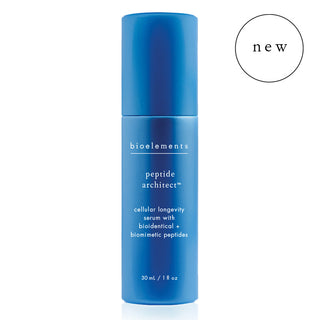
That is why Bioelements created iconic hyaluronic and peptide architect. Rather than adapting existing products, both formulas were built specifically for the biology of perimenopausal, menopausal and post-menopausal skin.
Iconic hyaluronic is designed to replenish significant dehydration caused by hormonal shifts, using six forms of hyaluronic acid at varied molecular weights to support hydration and barrier function. Peptide architect targets lost elasticity with bioidentical and biomimetic peptides, while omega-rich botanical oils provide essential nourishment and help support the barrier.
Both formulas are made without silicones or PEGs and use plant-based texture technologies selected with hormonally sensitive skin in mind. They were also clinically tested on women ages 36 to 80 across perimenopause, menopause and post-menopause, so their performance was evaluated on the women they were created to support.
Menopausal skin does not need to be treated like a problem or pushed backward in time. It deserves skin care that recognizes what has changed and responds accordingly. Explore Bioelements menopause solutions and discover an approach created for this stage of your skin.